


 Back
BackDoes Renters Insurance Cover Temporary Housing?
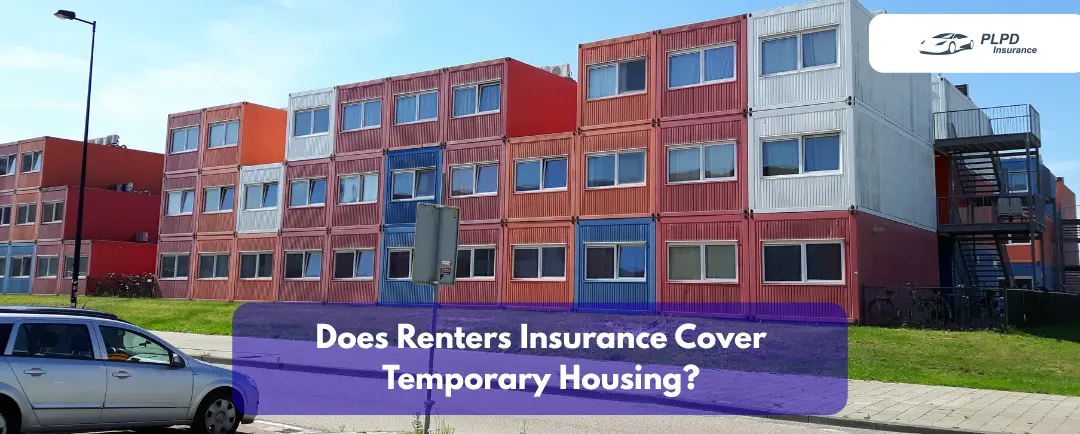
Yes, renters insurance does cover your temporary housing expenses, with the loss of use coverage also known as the additional living expenses coverage. This coverage specifically applies when your rental unit becomes unlivable due to covered perils like fire, storm damage, or certain types of water damage.
In this guide, you’ll learn what temporary housing means in renters insurance, which expenses are covered, when coverage applies, how much you can claim, and how long benefits last, along with the steps to claim the loss of use coverage.
What Does Temporary Housing Mean for Renters Insurance?
Temporary housing in renters insurance refers to the cost of living elsewhere when your rental becomes uninhabitable due to a covered loss. This is covered under loss of use, also known as additional living expenses (ALE).
It typically covers the extra cost of staying somewhere else, such as a hotel or short-term rental, which could be above your normal living expenses, up to your policy’s coverage limit, and for as long as your home is being repaired or the limit is reached.
For example, if your usual rent is $1,000 and your temporary stay costs $1,400, your policy may cover the $400 difference. The actual reimbursement can vary depending on your location and the cost of living in your area.
So, to make sure you’re adequately covered, it’s important to choose an affordable renters insurance policy that includes sufficient loss of use coverage. If you live in Michigan, consider working with a reliable Michigan insurance provider to find coverage that fits your needs.
How Does Renters Insurance Cover Your Temporary Housing Expenses?
Renters insurance covers temporary housing expenses through loss of use coverage, also known as additional living expenses (ALE). It reimburses the extra costs you incur when your rental becomes uninhabitable due to a covered loss.
Instead of paying all your living expenses, it typically covers the difference between what you normally spend and what you need to spend to maintain a similar standard of living. These expenses covered by ALE coverage include lodging, food, laundry, storage, gas, and parking.
Lodging
When your rental unit becomes uninhabitable, and you’re temporarily displaced due to a covered peril such as fire, water damage, or vandalism, the loss of use (ALE) coverage helps pay for your lodging expenses.
This may include the cost of staying in a hotel, motel, or short-term rental while your home is being repaired. Coverage typically applies to the extra cost above your normal housing expenses, allowing you to maintain a similar standard of living.
For example, if you usually pay $800 for rent but need to stay in a hotel that costs $120 per night for two weeks, which is about $1,680, your policy may reimburse the difference between your normal housing cost and the temporary stay, up to your coverage limit.
Food
Loss of use (ALE) coverage can also help with increased food costs when your rental becomes uninhabitable. If you’re unable to cook due to the lack of a kitchen, your policy may reimburse the extra money you spend on meals, such as dining out or ordering takeout. Simply put, your policy will pay the additional amount above your regular food expenses, not your entire grocery or meal cost.
For example, if you usually spend $300 a month on groceries but end up spending $550 on restaurant meals while staying in temporary housing, your policy may cover the $250 difference, up to your coverage limit.
Laundry
If your temporary housing does not include in-unit laundry facilities, then Loss of Use (ALE) coverage may help with laundry-related expenses. In such cases, you may need to rely on laundromats or paid laundry services while your rental is being repaired.
Instead of covering all laundry costs, the policy typically focuses on the added expense you incur compared to your normal routine at home. For instance, if you usually do laundry at home for minimal cost but spend $15 to $25 per week at a laundromat during your temporary stay, your policy may reimburse those additional expenses up to your coverage limit.
Storage
If you need to store your belongings while your rental is being repaired, loss of use (ALE) coverage may help cover the cost of a storage unit. This can be useful when your temporary housing doesn’t have enough space to accommodate all your possessions, especially your furniture and household appliances.
So, if you need a storage unit or multiple storage units, your policy may cover or reimburse the additional cost of short-term storage during your displacement, rather than long-term or permanent storage needs.
For example, if you need to rent a storage unit for $100 per month to keep your furniture and other belongings safe, your policy may cover that cost for the duration of your temporary stay, up to your coverage limit.
Gas
When you relocate to temporary housing, you may need to travel longer distances for work, school, or daily errands. In such cases, loss of use (ALE) coverage may help cover the extra fuel costs you incur.
Coverage typically applies to the additional transportation expenses above your usual commuting costs, especially if your temporary location is farther from your regular destinations.
For example, if your daily commute increases from 10 miles to 25 miles due to your temporary stay, the added fuel costs may be reimbursed, up to your policy’s coverage limit.
Parking
If your temporary housing requires paid parking, loss of use (ALE) coverage may help cover those added expenses. This can happen if you move from a rental with free parking to a location that charges daily or monthly parking fees.
For example, if you previously had free parking but now need to pay $10 per day at your temporary accommodation, your policy may reimburse those additional parking expenses, up to your coverage limit.
When Does Renters Insurance Cover Temporary Housing?
Whether you’re shopping for a renters insurance policy or you need to claim coverage when your rental unit is no longer livable, you first need to know when renters insurance covers temporary housing.
Typically, renters insurance includes 16 covered perils. So, if your rental becomes uninhabitable due to one of these covered events, loss of use (ALE) coverage may help pay for your temporary housing and related living expenses.
Common covered perils include:
- Fire or lightning
- Windstorm or hail
- Explosion
- Riot or civil commotion
- Aircraft (damage caused by aircraft)
- Vehicles (damage caused by vehicles)
- Smoke
- Vandalism or malicious mischief
- Theft
- Volcanic eruption
- Falling objects
- Weight of ice, snow, or sleet
- Accidental discharge or overflow of water or steam
- Sudden and accidental tearing apart, cracking, burning, or bulging of systems (e.g., HVAC, plumbing)
- Freezing of plumbing, heating, or air conditioning systems
- Sudden and accidental damage from artificially generated electrical current
When Does Renters Insurance Not Cover Temporary Housing?
Even if your policy includes loss of use (ALE) coverage, renters insurance won’t cover temporary housing if your rental becomes uninhabitable due to a non-covered peril.
In other words, if the cause of damage isn’t listed in your policy, your insurer won’t pay for your temporary living expenses. In these situations, since the damage isn’t caused by a covered peril, loss of use (ALE) coverage simply won’t apply.
Common exclusions include:
- Flood damage (unless you have a separate flood insurance policy)
- Earthquakes and other earth movements (unless covered by an additional earthquake insurance endorsement or policy)
- Damage due to lack of maintenance or neglect
- Pest infestations (e.g., rodents, termites, bed bugs)
- Intentional or criminal acts by you or a household member
- War, nuclear hazards, or government actions
- Power outages or utility failures that originate off-premises
- Mold, rust, or gradual damage over time
- Voluntary relocation (e.g., moving out for convenience or renovations)
- Business-related losses or displacement not covered under your policy
Does Renters Insurance Cover Hotel Stays?
If your rental home becomes unlivable due to a covered peril, your renters insurance policy will cover your hotel stay as long as you have the loss of use (ALE) coverage. However, instead of paying the full cost, your policy typically reimburses the extra expense of staying in a hotel above your normal living costs, up to your coverage limit.
For example, if you need to stay in a hotel while your home is being repaired, your policy may cover the additional cost of the stay compared to what you normally spend on housing.
How Much Temporary Housing Coverage Do You Get?
The amount of temporary housing coverage you receive depends on your loss of use (ALE) limit, which is typically a percentage of your personal property (Coverage C).
In most renters insurance policies, ALE coverage is usually around 20% to 30% of your personal property coverage limit. For example, if your personal property is insured for $30,000, your temporary housing coverage may range from $6,000 to $9,000.
This coverage is designed to pay for the additional living expenses you incur while your rental is uninhabitable, not your full cost of living. Once you reach your ALE limit, your insurer will no longer reimburse temporary housing or related expenses.
It’s important to review your policy limits carefully and consider increasing your personal property coverage if you want higher protection for temporary housing costs.
How Long Does Renters Insurance Cover Temporary Housing?
Repairing your rental unit can take time, which can range from a few days to weeks, months, or even years, depending on the severity of the damage and how promptly your landlord acts.
So, does that mean your renters insurance policy will cover your temporary housing expenses as long as it takes to repair your rental unit? Or, is there a certain time limit?
While the actual coverage time frame of the ALE coverage depends on your insurer, in general, the temporary housing should cover up to 12 to 24 months, or until your rental unit is fixed, whichever comes sooner.
How Do You Claim Renters Insurance for Temporary Housing?
If you need to claim temporary housing expenses under loss of use (ALE) coverage, you’ll have to file a renters insurance claim and document your additional living costs while your rental unit is uninhabitable.
Here’s how the process typically works.
- Notify your insurer immediately: Contact your insurance company as soon as your rental becomes uninhabitable due to a covered peril. Provide basic details about the damage and your situation.
- Confirm your ALE coverage: Review your policy or speak with your insurer to understand your coverage limits, eligible expenses, and whether pre-approval is required for temporary housing.
- Keep all receipts and records: Save receipts for hotel stays, meals, transportation, storage, and other related expenses. Your insurer will require proof of these costs for reimbursement.
- Track your additional expenses: Only the extra costs above your normal living expenses are covered, so it’s important to keep a clear record of what you usually spend versus what you’re spending during displacement.
- Submit your claim and documentation: Provide your insurer with all required documents, including receipts, invoices, and any supporting evidence of the damage.
- Work with the claims adjuster: Your insurer may assign an adjuster to review your claim, verify the damage, and determine the amount you’re eligible to receive.
- Receive payment or reimbursement: Once approved, your insurer will pay your temporary housing costs or reimburse eligible expenses up to your policy’s ALE coverage limit.
The Bottom Line: Is it Worth Covering Temporary Housing Costs Through Renters Insurance?
Just take a moment, and think if your rental unit somehow catches fire and burns down, what will you do? Or there’s a water pipe leakage that has made your rental unit unlivable.
In either of these situations, it can take a significant amount of time to get the damage repaired until your rental unit is livable again. Can you afford to fund the additional expenses required for temporary housing along with food, parking, and other essential costs?
Even if you can, for how long? If you have the loss of use (ALE) coverage, all these additional expenses can be covered by your rental insurance policy until your rental unit is repaired. This will help you financially secure a substantial cost, which can be financially overwhelming to bear as a sudden expense.
So, yes, it is definitely worth it to cover your temporary housing costs through renters insurance. If you’re considering renters insurance, make sure your policy includes sufficient loss of use coverage to handle temporary housing and related expenses.
If you’re considering purchasing renters insurance to stay prepared and protected against such incidents, you can contact us to get expert advice and a free quote.
Frequently Asked Questions (FAQs)
What counts as temporary housing?
Temporary housing refers to any short-term living arrangement you use when your rental becomes uninhabitable due to a covered loss. This can include hotels, motels, short-term rentals, or even staying with friends or family, as long as you incur additional living expenses that qualify under loss of use (ALE) coverage.
What are common reasons for needing temporary housing?
Common reasons include events that make your rental uninhabitable, such as fire, storm damage, certain types of water damage, vandalism, or other covered perils. In these situations, repairs may take time, requiring you to stay elsewhere temporarily.
Can you choose your own temporary housing with renters insurance?
Yes, in most cases you can choose your own temporary housing, such as a hotel or short-term rental. However, your insurer may require the cost to be reasonable and may ask for pre-approval for extended stays.
Does renters insurance cover temporary housing for roommates?
It depends on the policy. If your roommates are listed on the same policy, they may be covered. Otherwise, each tenant typically needs their own renters insurance to receive loss of use (ALE) benefits.
Will renters insurance pay upfront for temporary housing?
Some insurers may pay upfront or arrange direct billing with hotels, but many reimburse you after you submit receipts. Check with your insurer to understand how payments are handled.
Does renters insurance cover pet boarding during temporary housing?
In some cases, yes. If your rental is uninhabitable due to a covered peril, your policy may reimburse reasonable pet boarding costs under ALE coverage, depending on your insurer.
Does renters insurance cover temporary housing during renovations?
No, renters insurance usually does not cover temporary housing for planned renovations or voluntary moves. ALE coverage only applies when your rental becomes uninhabitable due to a covered peril.
Recent Posts

How Does Car Insurance Work After a Hit-and-Run in Michigan?

Are Older Cars Cheaper to Insure?

How to File a Renters Insurance Claim?
Categories
Life Insurance

Auto insurance
Insurance
Motorcycle Insurance
Renters Insurance
Homeowners Insurance
RV Insurance
Boat Insurance
Snowmobile Insurance
Follow Us