


 Back
Does Car Insurance Cover Aftermarket Parts and Modifications?
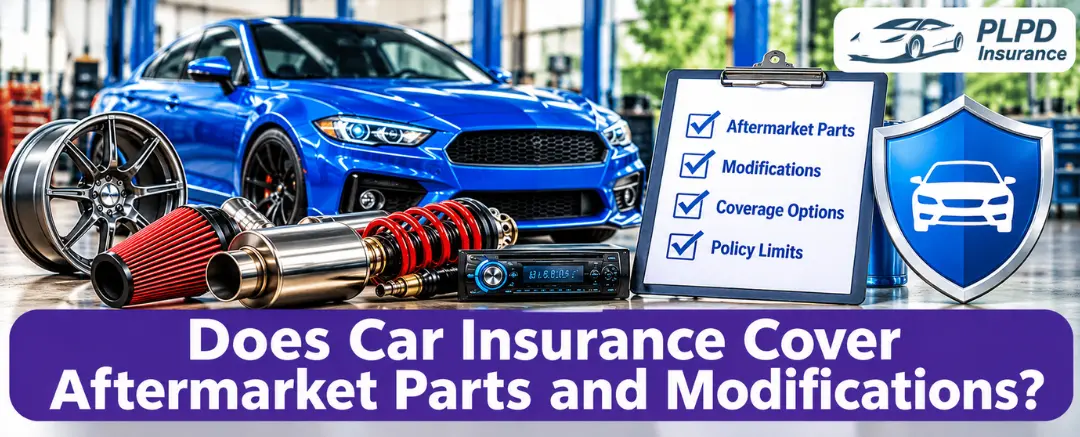
Yes, car insurance can cover aftermarket parts and modifications, but protection depends on your policy and the damage involved. Some policies include limited equipment coverage, while others require additional protection for eligible upgrades. However, reporting a modification does not automatically insure its full value. Your coverage limits, deductible, and exclusions still affect any payment.
A new stereo or suspension kit can create a gap between your investment and your insurance protection. Additionally, insurers distinguish ordinary replacement parts from upgrades that change performance or appearance. Therefore, confirm what your policy covers before installing expensive equipment. The same applies when buying a vehicle that already has modifications.
So, does insurance cover aftermarket parts on your car? The answer starts with understanding your existing protection and the equipment you want to insure. This article explains coverage options, documentation, claim payments, and Michigan repair rules. Keep reading to understand how these details affect protection for your upgrades.
What Counts as an Aftermarket Part or Car Modification?
Aftermarket parts generally come from manufacturers outside the vehicle manufacturer’s original equipment supply. In contrast, original equipment manufacturer (OEM) parts come from or through the vehicle manufacturer. However, aftermarket replacement parts do not always represent upgrades. A replacement fender can restore the original appearance without changing performance.
According to SEMA’s 2024 Market Report announcement, specialty-equipment sales reached approximately $52.3 billion in 2023. That figure measures industry sales, rather than the amount insurers cover. Additionally, modifications range from simple cosmetic changes to major mechanical alterations. These examples show several common categories.
Category | Examples |
Appearance | Custom paint jobs, vehicle wraps, body kits |
Wheels and suspension | Custom wheels and rims, suspension upgrades, lift kits |
Performance | Engine modifications, ECU tuning, performance exhaust systems |
Interior | Aftermarket sound systems, custom upholstery, added electronics |
Factory-installed equipment generally forms part of the vehicle’s original configuration. Meanwhile, owners or previous buyers may add equipment afterward. Therefore, knowing when someone installed a component does not fully establish its insurance treatment. Your insurer must also consider the equipment’s purpose and policy terms.
How Standard Auto Insurance Applies to Aftermarket Parts
Standard auto insurance does not provide one universal answer for every aftermarket component. Instead, the policy identifies covered property, qualifying incidents, and payment restrictions. Aftermarket parts insurance coverage may differ between ordinary replacement components and expensive custom equipment. Consequently, two drivers with similar upgrades can have different protection.
Does standard car insurance cover modifications? Sometimes it provides limited protection, but you should not assume every upgrade qualifies. Additionally, the phrase “full coverage” does not guarantee protection for all installed equipment. You need to review the actual policy and endorsements.
Before examining dollar limits, identify which coverage would handle the incident. A crash, theft, and equipment failure involve different questions. Furthermore, coverage for the vehicle does not automatically establish coverage for every accessory. Understanding those differences helps you identify where additional protection may be necessary.
For local guidance, discuss your vehicle’s modifications with PLPD in Flint, Saginaw, or Mt. Pleasant.
Collision and Comprehensive Coverage
Does collision insurance cover custom parts? It may cover eligible equipment damaged during a covered collision, subject to policy terms. For example, a crash could damage insured aftermarket wheels alongside the vehicle’s body. However, the insurer must still apply equipment restrictions and the relevant deductible.
Does comprehensive insurance cover aftermarket parts? It may protect eligible equipment against covered events such as theft, vandalism, fire, or falling objects. Additionally, comprehensive coverage generally handles animal collisions rather than ordinary crashes. The Michigan insurance department explains these differences between collision and comprehensive protection.
Michigan also offers different collision forms, which can affect payment and deductibles. Therefore, avoid assuming every collision policy handles fault identically. Review your coverage form alongside any custom equipment endorsement. Together, those provisions determine how the insurer assesses a particular covered loss.
Equipment Limits and Liability-Only Policies
Does liability-only insurance cover aftermarket upgrades? No, liability-only protection does not pay for damage to your own car or its modifications. Instead, liability coverage addresses qualifying claims against you. Michigan’s required no-fault coverage also serves different purposes from insuring your own custom equipment.
Meanwhile, some physical damage policies include a limited allowance for added equipment. However, the amount and eligible components vary by insurer. Therefore, do not rely on a commonly quoted allowance without checking your contract. Your declarations page and endorsements identify the applicable protection.
For example, one equipment limit might apply across several installed upgrades. Consequently, a stereo, wheels, and custom lighting could share that allowance. Ask whether limits apply per item, per incident, or across all custom equipment. Also, confirm whether an endorsement adds to or replaces an existing allowance.
When You Need Custom Parts and Equipment Coverage
Custom parts and equipment coverage can extend protection for eligible additions beyond your policy’s existing allowance. Insurers may call it CPE coverage or a custom equipment endorsement. However, the name alone does not establish which components qualify. You must check the endorsement’s definitions and conditions.
Consider this protection when replacing your upgrades would exceed your existing equipment allowance. Additionally, installation labor can represent a significant part of your investment. Ask whether the insured amount includes those charges. Also, confirm which underlying coverages the insurer requires.
Before adding coverage, clarify:
- Which modifications qualify.
- Whether limits include installation labor.
- Whether one limit covers all equipment.
- Which deductibles apply.
- Whether depreciation affects payment.
Modified car insurance often describes a combination of coverages rather than one standardized product. Similarly, car modification insurance does not guarantee acceptance of every performance upgrade. Heavily modified vehicles may require specialty auto insurance with separate underwriting requirements. Therefore, confirm eligibility and any storage or driving restrictions before choosing that option.
What Can Limit or Exclude Coverage for Modifications?
A custom equipment endorsement does not function as an unlimited repair plan. Generally, ordinary wear, deterioration, and mechanical breakdown fall outside standard collision and comprehensive protection. For example, a worn suspension component presents a different issue from collision damage. Additionally, faulty installation may raise separate exclusion or warranty questions.
According to AAA’s repair coverage explanation, standard insurance typically excludes maintenance and mechanical failures. However, insurers must evaluate the actual cause of damage under the policy. Therefore, explain what happened rather than assuming every broken aftermarket part qualifies. Keep repair findings that help establish the damage’s cause.
Other provisions deserve attention:
- Racing, competition, or track-use restrictions.
- Limits for electronics and accessories.
- Requirements for permanently installed equipment.
- Restrictions involving major structural or performance changes.
Removable accessories may receive different treatment from permanently installed components. Furthermore, an insurer might decline a vehicle with modifications outside its acceptance rules. Legal compliance also does not guarantee insurance protection. Conversely, avoid assuming any questionable modification automatically cancels every coverage under the policy.
How Modifications Affect Car Insurance Costs
Modified car insurance cost depends on the vehicle, equipment, coverage choices, and insurer. Expensive parts can increase repair costs, while specialized labor can complicate repairs. Additionally, certain upgrades may increase theft risk. Performance changes can also influence whether an insurer accepts the vehicle.
However, not every modification produces the same premium change. Some eligible anti-theft devices may qualify for discounts. Meanwhile, a cosmetic alteration could affect equipment value without changing engine performance. Therefore, request pricing for the actual modification rather than relying on general estimates.
The National Association of Insurance Commissioners explains that underwriting evaluates risk, while rating assigns a price. Coverage choices also influence insurance premiums. Consequently, a higher equipment limit or different deductible can change your quote. Ask for a breakdown when comparing the cost of additional protection.
When comparing insurance for modified cars, use matching coverage limits and deductibles. Otherwise, the cheaper quote may protect less equipment. Also, compare valuation methods and policy exclusions before judging the price. A meaningful comparison shows both what you pay and what protection you receive.
For additional ways to manage premiums, read our guide on how to save money on auto insurance.
How to Document and Add Coverage for Your Upgrades
Tell your insurer about existing or planned modifications before relying on coverage. If you bought a modified vehicle, identify its upgrades as accurately as possible. Additionally, ask the seller for available records. This helps the insurer assess equipment beyond the original vehicle description.
Use this checklist to organize your request:
- List each modification, including its brand and model.
- Collect parts receipts and installation invoices.
- Take clear, dated modification photos.
- Provide an appraisal when the insurer requests one.
- Confirm eligible equipment and the coverage effective date.
- Obtain written coverage confirmation.
However, insurer approval of the vehicle does not necessarily insure every upgrade. Ask whether the policy specifically includes your equipment. Also, retain the endorsement alongside your declarations page. Written confirmation should match the policy documents.
Undeclared modifications can create valuation disputes or other coverage problems. Depending on the facts, policy, and law, nondisclosure may have more serious consequences. Therefore, disclose car modifications accurately and answer application questions completely. Update the insurer when later changes affect your equipment or vehicle.
How Insurers Value Aftermarket Parts After a Claim
Insurers evaluate more than the original purchase price when calculating a claim. They consider the damaged property, coverage terms, and applicable valuation method. Additionally, equipment age and condition may affect the amount payable. Receipts establish spending, but they do not guarantee reimbursement of every dollar.
After a loss, photograph the vehicle and damaged equipment before repairs whenever possible. Then, provide your inventory, invoices, and other supporting records. Ask the adjuster to identify which modifications appear in the estimate. Consequently, you can address missing components before accepting the calculation.
Repair claims and total loss settlements involve different calculations. A repair estimate concerns covered work needed to restore the vehicle’s pre-loss condition. Meanwhile, a total loss settlement concerns the insured vehicle’s value under the contract. Understanding that distinction helps explain why upgrade spending and insurance payments can differ.
Our guide to the auto accident insurance claim process explains the steps from reporting damage through settlement.
Repair Costs, Coverage Limits, and Deductibles
Repair or replacement costs depend on the equipment, available components, and necessary labor. However, the insurer may apply depreciation or other adjustments permitted by the policy. Coverage limits can also restrict payment even when repair costs exceed them. Therefore, review the estimate alongside the endorsement.
Consider this hypothetical example involving only insured custom equipment. Assume the insurer accepts $3,000 in covered damage, below the applicable equipment limit. Also, assume a $500 deductible applies without other adjustments. Under those assumptions, the payment would total $2,500.
Real claims can involve additional factors, including combined vehicle damage and equipment sublimits. Furthermore, Michigan collision forms may affect whether a deductible applies. Ask how the insurer calculated each adjustment. If specialized work costs more than the estimate, submit the shop’s supporting explanation.
Actual Cash Value vs. Agreed Value
Actual cash value (ACV) generally reflects the vehicle’s value immediately before the loss, accounting for depreciation. However, adding $5,000 in modifications does not necessarily increase market value by $5,000. Buyers may value some changes differently from their owners. Consequently, modification costs and vehicle value can diverge.
Agreed value coverage establishes an insured value in advance for qualifying vehicles. A vehicle appraisal, photographs, and other documentation may support that agreement. After a covered total loss, the contract governs payment of that agreed amount. Deductibles and other applicable terms still matter.
Additionally, stated value differs from agreed value. Depending on the policy wording, stated value coverage may pay the lower of ACV or the stated amount. Therefore, the stated amount does not necessarily guarantee your total loss payment. Confirm the settlement terms when comparing these valuation options.
Can Insurers Use Aftermarket Parts for Repairs in Michigan?
Yes, an insurer may include non-OEM parts in a Michigan repair estimate, subject to applicable requirements. This differs from insuring upgrades already installed on your vehicle. Here, the question concerns which replacement parts the repair estimate specifies. Therefore, review the estimate before authorizing the work.
Under MCL 257.1363, insurer-requested non-OEM aftermarket crash parts require written identification and a prescribed disclosure. The disclosure explains that the parts come from another source. It also addresses who provides their warranties. However, this Michigan aftermarket crash parts disclosure does not establish coverage for custom upgrades.
Additionally, the Insurance Information Institute distinguishes OEM components from generic replacement parts. Both can appear in the repair process. If you prefer OEM parts, discuss that request before repairs begin. Your policy may leave you responsible for an additional cost difference.
Michigan non-OEM parts rules address disclosure rather than guaranteeing your preferred replacement brand. Consequently, ask the shop and adjuster to explain any disputed component. Keep the written estimate and related communications. These records help clarify what everyone approved.
The Bottom Line
Car insurance for aftermarket parts depends on the equipment, policy, and covered event. Standard protection may leave expensive upgrades partly or entirely outside your coverage. Therefore, compare your equipment’s value with your existing allowance. Then, confirm whether additional protection suits your vehicle.
When reviewing modified car insurance in Michigan, consider exclusions alongside premiums. Your coverage should reflect your upgrades and driving habits. Additionally, accurate records make coverage discussions and claim reviews easier. Confirm the policy includes your equipment before relying on protection.
At PLPD, we understand that drivers need clear information when comparing their options. Your review should connect your vehicle’s features with the coverage available. Before making your next upgrade, gather your equipment details and questions. Contact PLPD to review your auto insurance in Michigan and discuss your vehicle’s modifications.
Frequently Asked Questions (FAQs)
Does Insurance Cover Aftermarket Parts That Have Not Been Installed Yet?
Coverage for installed equipment may not extend to loose or stored parts. However, some specialty policies offer separate spare-parts protection. Ask your insurer whether your uninstalled equipment qualifies and what limits apply.
Can I Remove My Custom Parts Before Surrendering a Totaled Car?
Get your insurer’s written permission before removing custom parts. The settlement may include those components, so removing them could reduce your payment. Also, confirm whether you must reinstall factory parts before surrendering the vehicle.
Can I Insure a Modified Car Without Receipts for the Upgrades?
Possibly, depending on the documentation your insurer accepts. Photos, installation records, seller documents, or an appraisal may help establish the equipment’s identity and value. Ask which records you need before assuming the upgrades qualify for coverage.
References:
- AAA. (n.d.). Does car insurance cover repairs? https://ace.aaa.com/insurance/auto-insurance/does-car-insurance-cover-repairs.html
- Insurance Information Institute. (n.d.). FAQs about direct repair programs and generic auto parts. https://www.iii.org/article/faqs-about-direct-repair-programs-and-generic-auto-parts
- Michigan Department of Insurance and Financial Services. (n.d.). Purchasing auto insurance FAQ. https://www.michigan.gov/difs/News-and-Outreach/faq/insurance/info-purchasing-auto-insurance
- Michigan Aftermarket Crash Parts Act, Mich. Comp. Laws § 257.1363 (1991). https://www.legislature.mi.gov/Laws/MCL?objectName=MCL-257-1363
- National Association of Insurance Commissioners. (2025, September 26). Auto insurance. https://content.naic.org/insurance-topics/auto-insurance
- SEMA News Editors. (2024). Automotive specialty-equipment sales grow to $52.3 billion. Specialty Equipment Market Association. https://www.sema.org/news-media/enews/2024/26/automotive-specialty-equipment-sales-grow-523-billion
Recent Posts

Does Car Insurance Cover Damage Caused by Rodents?
Does Car Insurance Cover Aftermarket Parts and Modifications?
Do You Need Insurance to Rent a Car in Michigan?
Categories
Life Insurance

Auto insurance
Insurance
Motorcycle Insurance
Renters Insurance
Homeowners Insurance
RV Insurance
Boat Insurance
Snowmobile Insurance
Follow Us