


 Back
Can You Get Car Insurance With a Salvage Title in Michigan?
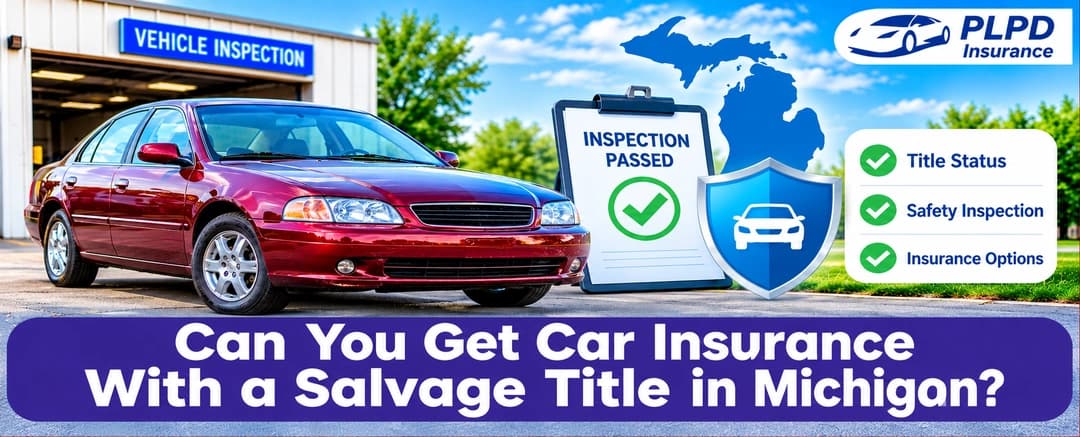
Finding salvage title insurance in Michigan can be challenging, especially for vehicles with active salvage titles. However, coverage may become available once a vehicle meets the state's rebuilding requirements. Even then, insurers may restrict certain protections based on the vehicle's history. Your options depend on its title status, condition, and the insurance company's underwriting rules.
Michigan has specific requirements for vehicles that insurers declare a total loss. These rules affect whether you can repair, register, insure, and legally drive the vehicle. Additionally, a rebuilt title does not guarantee access to every type of auto insurance coverage. This guide explains Michigan salvage title laws, insurance options, costs, and the steps involved in getting coverage.
Understanding Salvage Titles Under Michigan Law
Michigan uses salvage and scrap titles to identify vehicles with significant damage. For qualifying distressed vehicles, the state compares estimated repair costs with their pre-damage actual cash value. These calculations help determine the appropriate title classification. However, vehicle age, ownership circumstances, and other statutory rules can also affect the requirements.
According to the Michigan Secretary of State, a vehicle generally qualifies for a salvage title when damage reaches 75% but remains below 91% of its pre-damage value. Damage reaching 91% or more generally places the vehicle in the scrap category. These percentages apply under Michigan's statutory title-branding rules, which also contain specific exceptions.
For example, consider a vehicle worth $12,000 before an accident. If qualifying repair costs reach $9,000, the damage equals 75% of its previous value. Consequently, the vehicle may meet Michigan's salvage title threshold. However, the final classification depends on the applicable legal requirements and the vehicle's circumstances.
Title Classification | Meaning | Road Use and Insurance Considerations |
Clean title | No salvage or rebuilt brand | Generally eligible for normal registration and insurance |
Salvage title | Significant damage with potential for rebuilding | Cannot return to normal road use until state requirements are met |
Rebuilt salvage title | Previously salvaged vehicle that completed the required recertification process | May qualify for registration and insurance |
Scrap title | Vehicle classified as scrap under Michigan law | Cannot be rebuilt and returned to normal road use |
Vehicle title branding also helps future buyers identify a vehicle's history. Even after successful repairs, a rebuilt salvage vehicle retains a record of its previous designation. Therefore, buyers should not assume that a repaired vehicle has the same history as a clean-title vehicle. That distinction can affect insurance eligibility, resale value, and future claims.
Insurance Eligibility for Salvage and Rebuilt-Title Vehicles
Insurance companies generally treat active salvage titles differently from rebuilt titles. An active salvage designation indicates that the vehicle has not completed Michigan's requirements for returning to normal road use. Consequently, most insurers will not offer standard driving coverage under the same conditions as a registered vehicle. However, coverage arrangements during repairs and retitling may differ.
A rebuilt salvage title changes that situation. Once the vehicle completes Michigan's required process, insurers can evaluate it for regular car insurance in Michigan. However, a rebuilt designation does not guarantee approval from every insurance company. Insurers may request additional information before deciding whether to issue a policy.
Insurance underwriting involves evaluating risks before issuing or renewing a policy. For rebuilt vehicles, insurers may review repair documentation, previous damage, and current vehicle condition. Additionally, they may consider whether earlier damage could complicate future claims. These factors explain why insurance for rebuilt title cars may differ between providers.
Importantly, Michigan's rebuilt-title process includes proof of no-fault insurance when applying for the rebuilt title. Therefore, drivers should contact an insurer before completing the final title application. Obtaining insurance for that process does not automatically authorize normal road use. The vehicle must still meet the state's applicable registration and operating requirements.
Michigan's Salvage Vehicle Inspection and Rebuilt Title Process
Michigan requires salvage vehicles to pass an inspection before returning to normal road use. During this process, an authorized inspector reviews vehicle identification details, replacement parts, and repair documentation. The inspection also addresses applicable requirements for the vehicle's repairs and equipment. However, passing the inspection does not guarantee that every mechanical issue has been identified.
1. Complete the Necessary Vehicle Repairs
Start by repairing the damage that led to the salvage designation. The work may involve structural components, mechanical systems, body panels, or safety equipment. Michigan requires appropriate mechanic certification for the repairs documented on the inspection application. Therefore, owners should confirm the applicable requirements before beginning major work.
Keep receipts for replacement parts, repair invoices, and records identifying the completed work. The inspection application requires information about major replacement components. It also requires the repairer to describe the work performed. Complete records can prevent problems when the inspector reviews the vehicle.
2. Apply for a Salvage Vehicle Inspection
Once repairs are complete, prepare Form TR-13A with the required mechanic certification. Next, submit the application, salvage title, and supporting parts receipts to a certified salvage vehicle inspector. Michigan uses specially trained law enforcement officers for these inspections. The inspector reviews the documentation before scheduling the physical examination.
During the inspection, the officer checks the vehicle identification number (VIN) and replacement parts. The officer also verifies ownership records and compliance with applicable vehicle safety standards. If the vehicle meets the requirements, the inspector completes Form TR-13B, the Salvage Vehicle Recertification. According to Michigan's Application for Salvage Vehicle Inspection (TR-13A), the inspection fee may reach $100.
3. Apply for a Michigan Rebuilt Salvage Title
After passing inspection, the owner can apply for a rebuilt salvage title. The Michigan Secretary of State requires several documents to complete this application. These records confirm that the vehicle has met the state's recertification requirements. Additionally, the owner must provide proof of Michigan no-fault insurance.
Required Document | Purpose |
Original salvage title | Establishes the vehicle's current title status |
Completed TR-13A | Documents the inspection application and repairs |
Signed TR-13B | Confirms successful salvage recertification |
Michigan no-fault insurance | Provides required insurance documentation |
Driver's license or state ID | Verifies the applicant's identity |
Title and registration fees | Covers applicable state processing charges |
Michigan currently lists a $15 rebuilt title application fee, plus applicable registration charges. After approval, the new title carries the designation REBUILT SALVAGE. This designation remains part of the vehicle's title history. Consequently, future buyers and insurers can identify its previous salvage status.
Insurance Coverage Options for Rebuilt-Title Cars
A rebuilt title can make a vehicle eligible for several types of auto insurance. However, insurance companies may offer different coverage combinations based on their underwriting guidelines. Michigan's mandatory no-fault requirements still apply to vehicles registered for normal road use. Optional coverage for damage to the insured vehicle requires separate consideration.
The following table summarizes the main coverage categories.
Insurance Coverage | What It Generally Covers | Rebuilt-Title Considerations |
Personal injury protection (PIP) | Eligible accident-related injury benefits | Subject to Michigan's PIP selection and eligibility rules |
Property protection insurance (PPI) | Certain property damage caused by the insured vehicle in Michigan | Part of required no-fault coverage |
Residual bodily injury/property damage liability | Certain legal liabilities following an accident | Required limits and policy terms apply |
Comprehensive | Covered noncollision damage, such as theft or hail | Availability depends on the insurer |
Collision | Covered damage to the insured vehicle from a collision | May require additional review or have restrictions |
Michigan's Required No-Fault Insurance Coverage
Michigan requires owners of registered vehicles to maintain specific no-fault insurance coverage. These requirements apply even when the vehicle has a rebuilt salvage title. The Michigan Department of Insurance and Financial Services (DIFS) explains the state's coverage choices and requirements. Drivers should understand these protections before selecting a policy.
Personal injury protection (PIP) provides eligible benefits following an auto accident. Michigan offers different PIP medical coverage choices, including unlimited protection and several limited options. However, certain lower-limit choices and medical coverage exclusions have specific eligibility requirements. Therefore, drivers should review their available options instead of choosing solely by price.
Property protection insurance (PPI) provides up to $1 million for certain damage to property in Michigan. Residual liability insurance addresses specified bodily injury and property damage liabilities. Michigan's default bodily injury liability limits are $250,000 per person and $500,000 per accident. Eligible drivers may select lower limits under the state's rules, subject to required documentation.
Comprehensive and Collision Coverage
Comprehensive coverage generally protects against covered noncollision events, including theft, hail, and certain weather damage. Collision coverage generally pays for covered damage involving another vehicle or object. Neither coverage automatically comes with Michigan's required no-fault policy. Additionally, insurers may apply special underwriting requirements to rebuilt-title vehicles.
Previous damage makes physical damage coverage more complicated. For example, an insurer may need photographs, repair records, or an appraisal to assess the vehicle. Some companies may decline comprehensive or collision coverage entirely. Others may consider these protections after reviewing the vehicle's condition and value.
Drivers searching for full coverage insurance for rebuilt cars should confirm exactly what the policy includes. The term full coverage does not describe one standardized insurance product. Instead, it commonly refers to a combination of liability, comprehensive, and collision protections. Always review the actual policy terms, deductibles, and exclusions before purchasing coverage.
Steps to Insure a Rebuilt-Title Vehicle in Michigan
Finding car insurance for a rebuilt vehicle requires more preparation than insuring a typical clean-title car. Although some insurers accept rebuilt vehicles, their application requirements may differ. Having accurate vehicle information and repair records can make the process easier. The following steps can help Michigan drivers compare suitable insurance options.
1. Confirm the Vehicle's Current Title Status
Start by checking whether the vehicle has an active salvage title or a rebuilt salvage designation. This distinction matters because insurers assess these vehicles differently. If the vehicle still needs recertification, explain its current status when contacting an insurance provider. Additionally, ask about obtaining the no-fault insurance required for Michigan's rebuilt-title application.
2. Gather the Necessary Vehicle Documents
Prepare the vehicle's VIN, title information, and available repair documentation. Insurers may also request photographs, inspection records, or a vehicle history report. These documents help establish the vehicle's current condition and previous damage. Furthermore, accurate records can reduce questions during the insurance underwriting process.
3. Compare Insurance Companies and Coverage Options
Not every insurance company accepts rebuilt-title vehicles under the same conditions. Therefore, drivers seeking cheap auto insurance in Michigan should disclose the vehicle's title history when requesting quotes. Ask whether they offer mandatory no-fault coverage, comprehensive protection, and collision insurance. Also, confirm whether any additional inspections or documentation are necessary.
4. Review the Policy Before Purchasing
Compare more than the quoted premium when evaluating insurance options. Check the coverage limits, deductibles, exclusions, and conditions affecting future claims. Additionally, ask how the insurer determines the value of a rebuilt vehicle. Once you select a policy, confirm its effective date and complete any remaining registration requirements.
Factors Affecting Rebuilt Title Car Insurance Costs
Rebuilt title car insurance costs depend on several factors, including the vehicle's condition and the insurer's underwriting rules. Some companies may charge more because previous damage creates uncertainty about future repairs and claims. However, a rebuilt title does not automatically produce the same premium increase with every insurer. Actual pricing depends on the complete risk profile and coverage selected.
For example, two rebuilt vehicles may have similar market values but different repair histories. One may have documented cosmetic repairs, while another required extensive structural work. Insurers may evaluate these vehicles differently when deciding whether to offer physical damage coverage. As a result, their available policies and premiums may vary.
Several factors can influence the final insurance quote:
Pricing Factor | How It May Affect Insurance Costs |
Vehicle age, make, and model | Influences repair costs and vehicle valuation |
Previous damage and repairs | May affect underwriting eligibility and coverage |
Driving record | Accidents and violations can affect premiums |
Location | Local claims experience and other rating factors may influence costs |
Coverage selections | Higher limits and additional protections generally increase premiums |
Deductibles | Higher deductibles often reduce premiums but increase out-of-pocket costs |
Insurance provider | Underwriting rules and pricing differ between companies |
Michigan's insurance regulations influence how companies determine premiums. However, Michigan auto insurance rates still depend on driving history, vehicle characteristics, coverage selections, and insurer pricing. Drivers seeking affordable auto insurance in Michigan should compare policies with consistent coverage limits and deductibles. Additionally, check whether each quote includes comprehensive and collision protection.
How Rebuilt Titles Affect Vehicle Value and Insurance Claims
A rebuilt salvage title can influence a vehicle's market value even after successful repairs. Buyers may offer less because the vehicle previously sustained significant damage. Furthermore, its history may create uncertainty about long-term reliability and future repair expenses. These considerations can affect both resale transactions and insurance claim settlements.
Insurers often use actual cash value (ACV) when determining payments for covered total losses. ACV generally reflects a vehicle's value immediately before the covered loss, subject to applicable policy terms and law. A rebuilt vehicle may have a different market value than a comparable clean-title vehicle. Therefore, its previous salvage history can influence the amount an insurer determines.
Consider two vehicles with identical models, mileage, and equipment. One has a clean title, while the other carries a rebuilt salvage designation. Even if both operate normally, their market values may differ. Consequently, a covered total-loss settlement may also differ because the vehicles do not necessarily have identical values. Pre-existing vehicle damage can also complicate an insurance claim. For example, an insurer may need to determine which damage occurred during the recent accident. Repair photographs and previous inspection records can help establish the vehicle's earlier condition. However, the insurer must still evaluate the claim under the applicable policy and Michigan law.
Before purchasing comprehensive or collision coverage, ask the insurer how it values rebuilt vehicles. Also, review the deductible and any applicable physical damage exclusions. A policy may provide coverage without guaranteeing the same settlement as a comparable clean-title vehicle. Understanding these limitations helps drivers make informed insurance decisions.
Important Considerations Before Buying a Salvage-Title Car
A salvage-title vehicle may cost less than a comparable vehicle with a clean title. However, the lower purchase price does not necessarily mean lower overall ownership costs. Repairs, inspections, registration, and insurance restrictions can affect the vehicle's actual value. Therefore, buyers should consider these expenses before committing to a purchase.
Start by identifying why the vehicle received its salvage designation. Collision damage, flooding, or other serious incidents may create different repair concerns. Additionally, inspect the vehicle's structural condition, mechanical systems, and safety equipment. An independent inspection by a qualified professional can help identify problems that are not immediately visible.
A vehicle history report can reveal previous title classifications, reported damage, and ownership information. However, these records may not capture every accident or repair. Buyers should compare the report with available inspection documents and repair receipts. This helps establish a clearer picture of the vehicle's condition.
Before purchasing, review the following considerations:
What to Check | Why It Matters |
Current title status | Determines whether additional rebuilding steps are necessary |
Cause of previous damage | Helps identify potential repair and safety concerns |
Repair receipts | Documents completed work and replacement parts |
Inspection certification | Confirms completion of Michigan's required recertification process |
Vehicle history report | Helps identify reported title brands and previous damage |
Insurance availability | Confirms whether an insurer will consider the vehicle |
Total ownership cost | Accounts for repairs, fees, insurance, and future expenses |
Before purchasing a rebuilt vehicle, confirm whether the available insurance satisfies your intended use and financing requirements. Some lenders require comprehensive and collision coverage throughout the loan term. If an insurer cannot provide those protections, financing may become more difficult. Checking these conditions before purchasing helps prevent unexpected ownership costs.
Buyers should also distinguish between a vehicle's appearance and its documented condition. Fresh paint or replacement panels do not necessarily confirm that previous damage was properly repaired. Instead, review the inspection records and request an independent assessment when appropriate. These precautions help determine whether the vehicle's price reflects its condition and insurance limitations.
For additional information about arranging coverage before purchasing a vehicle, read our guide on how to get auto insurance before buying a car.
The Bottom Line: Finding Insurance for Rebuilt Vehicles in Michigan
Getting car insurance with an active salvage title in Michigan involves important restrictions. A vehicle generally must complete the state's rebuilding and recertification process before returning to normal road use. However, Michigan also requires proof of no-fault insurance during the rebuilt-title application process. Therefore, insurance eligibility and legal registration requirements must be considered together.
Once a vehicle receives its rebuilt salvage title, additional insurance options may become available. Still, insurers can apply different underwriting rules, particularly for comprehensive and collision coverage. Previous damage may also influence the vehicle's market value and future claim settlements. Comparing coverage terms helps drivers identify suitable protection without relying on price alone.
Before purchasing or insuring a rebuilt vehicle, verify its title status and review its repair history. Additionally, confirm that your preferred coverage is available for that vehicle. At PLPD Insurance, we help Michigan drivers explore coverage options that fit their needs. If you're unsure where to start, contact our team to discuss your vehicle's title status and available insurance options.
Frequently Asked Questions (FAQs)
Can You Drive a Car With an Active Salvage Title in Michigan?
No, an active salvage title generally does not permit normal driving on Michigan public roads. The vehicle must complete the required inspection and rebuilt-title process before returning to regular use. Any permitted movement of a salvage vehicle must comply with Michigan's applicable transportation, inspection, and registration rules. However, this exception does not authorize ordinary transportation or unrestricted driving.
How Long Does a Michigan Salvage Vehicle Inspection Take?
Michigan does not establish one universal processing time for every salvage vehicle inspection. Scheduling depends on the inspector's availability and the completeness of the submitted documents. The inspector reviews the application and supporting records before arranging the physical inspection. Therefore, owners should contact an authorized inspector directly to confirm scheduling and expected processing times.
Can a Rebuilt Title Be Converted Back to a Clean Title?
No, Michigan's standard rebuilt salvage process does not restore a clean title. Once a salvage vehicle passes inspection, the state issues a title marked REBUILT SALVAGE. This designation remains on subsequent titles and informs future owners about the vehicle's history. Consequently, completing additional repairs does not ordinarily eliminate the previous salvage classification.
Can You Finance a Vehicle With a Rebuilt Title?
Financing a rebuilt-title vehicle may be possible, but lender policies vary. Some lenders avoid these vehicles because their previous damage can complicate valuation and resale. Others may consider financing after reviewing the title, condition, and available insurance coverage. Before applying, confirm whether the lender accepts rebuilt vehicles and requires comprehensive or collision protection.
Recent Posts
Can You Get Car Insurance With a Salvage Title in Michigan?

Does Homeowners Insurance Cover Roof Leaks?
How Does Car Insurance Work After a Hit-and-Run in Michigan?
Categories
Life Insurance

Auto insurance
Insurance
Motorcycle Insurance
Renters Insurance
Homeowners Insurance
RV Insurance
Boat Insurance
Snowmobile Insurance
Follow Us