


 Back
BackDoes Auto Insurance Cover Transmission Repair?
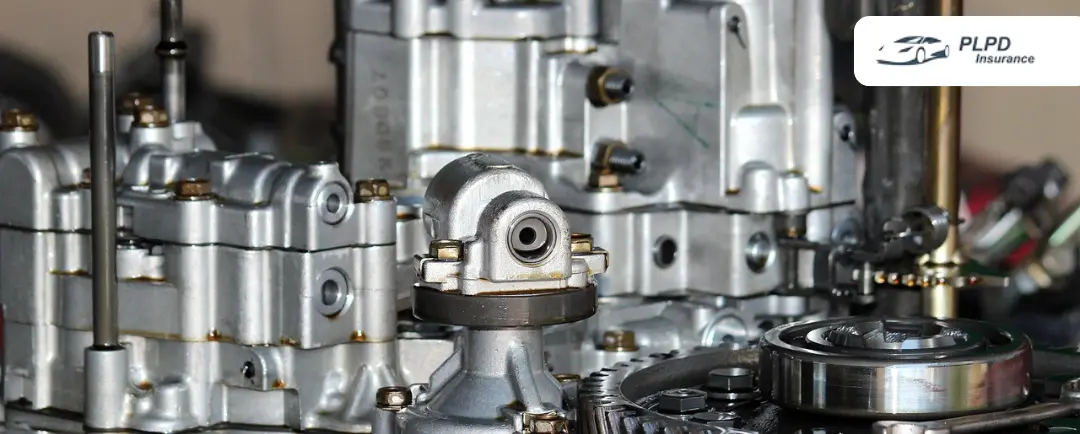
If you're wondering whether auto insurance covers transmission repair, the answer depends on what caused the damage. If your car’s transmission gets damaged gradually due to wear and tear, then your auto insurance won’t cover it. However, if it’s due to any accidental damage then yes, your auto insurance will cover the transmission repair or replacement costs.
When Does Auto Insurance Cover Transmission Repair?
Auto insurance is designed to protect you financially when your vehicle is damaged by a covered accident or another covered peril, such as fire, theft, vandalism, or certain natural disasters. If your transmission is damaged as a direct result of one of these covered events, your insurance policy may help pay for the repair or replacement, depending on the coverage you carry.
On the other hand, standard auto insurance won't cover transmission repairs resulting from normal wear and tear, mechanical failure, or routine maintenance. Those expenses are generally considered part of regular vehicle ownership.
The transmission is one of the most expensive components to repair or replace. In some cases, the cost of repairing a vehicle after a covered accident may exceed its actual cash value (ACV), or meet your insurer's total loss threshold.
When this happens, your insurance company may declare the vehicle a total loss instead of approving the repairs. Rather than paying to replace the transmission, the insurer will generally compensate you for the vehicle's actual cash value at the time of the loss, minus your applicable deductible, subject to your policy terms and state regulations.
Because insurance companies determine a vehicle's actual cash value using factors such as its age, mileage, condition, and market value, the settlement amount may differ from what you originally paid for the vehicle.
When Doesn't Auto Insurance Cover Transmission Repair?
While auto insurance may cover transmission damage caused by a covered accident or unexpected event, it generally won't pay for repairs resulting from mechanical problems that develop over time. Standard auto insurance is designed to protect against sudden, accidental losses, not routine vehicle ownership costs.
In most cases, your insurance company won't cover transmission repair if the damage is caused by:
- Normal wear and tear from everyday driving
- Lack of routine maintenance, such as skipping recommended transmission fluid changes
- Mechanical failure due to age or high mileage
- Manufacturing defects, which may instead be covered under a warranty
- Overheating or internal damage caused by neglected maintenance
- Routine servicing or preventive maintenance
If your transmission fails because of any of these reasons, you'll typically be responsible for the repair costs unless you have another form of protection, such as a manufacturer warranty, extended warranty, or mechanical breakdown insurance.
Signs Your Transmission May Be Failing
Recognizing the early signs of transmission trouble can help you address minor issues before they turn into expensive repairs. While these symptoms don't necessarily mean you'll need a complete transmission replacement, they indicate that your vehicle should be inspected by a qualified mechanic as soon as possible.
Some of the most common signs of transmission problems include:
- Slipping gears: Your vehicle unexpectedly changes gears or struggles to stay in the correct gear while driving.
- Delayed or rough shifting: The transmission hesitates, jerks, or shifts harshly when changing gears.
- Grinding or unusual noises: Grinding, whining, or clunking sounds may indicate worn or damaged internal components.
- Burning smell: Overheated or deteriorated transmission fluid can produce a noticeable burning odor.
- Transmission fluid leaks: Red or reddish-brown fluid beneath your vehicle may signal a leak that should be repaired promptly.
- Check engine or transmission warning light: Warning lights can indicate transmission-related issues that require professional diagnosis.
If you notice any of these warning signs, schedule a vehicle inspection as soon as possible. Addressing transmission problems early may help prevent more extensive damage and reduce repair costs. Keep in mind that standard auto insurance generally won't cover transmission repairs caused by normal wear and tear or mechanical failure, so timely maintenance is essential.
Types of Auto Insurance that Covers Transmission Repair
There are different types of auto insurance coverages that compensate accidental damages for specific incidents. To help you properly understand the types of auto insurance that cover transmission repair, here’s a detailed discussion as follows.
If you're looking for affordable auto insurance in Michigan, we offer a variety of cheap car insurance coverage options to fit your needs.
Collision Auto Insurance
The collision auto insurance is an optional but crucial auto insurance policy that covers accidental damage due to collision. Whether your car has crashed into another vehicle, or object, collision insurance will cover the expenses up to your coverage limit regardless of whoever is at-fault for the accident.
So, if your transmission gets damaged due to colliding or crashing into another vehicle your collision auto insurance coverage will pay for your transmission’s repair and replacement costs up to your coverage limit.
Comprehensive Auto Insurance
Comprehensive auto insurance has been specifically designed to protect your car from perils, and unforeseen accidents that are beyond your control which includes damages due theft, vandalism, fire hazards, natural disasters such as storms, flood, earthquake among others.
If your transmission is damaged by a covered event, such as flooding or fire, your comprehensive coverage may help pay for the repair. If the vehicle is declared a total loss, your insurer will generally pay its actual cash value, minus your applicable deductible, subject to your policy limits.
Mechanical Breakdown Insurance (MBI)
Mechanical Breakdown Insurance (MBI) is an optional auto insurance coverage offered by some insurance companies that helps pay for unexpected mechanical failures after your manufacturer's warranty expires. Depending on the policy, it may cover major vehicle components such as the transmission, engine, air conditioning system, and other essential mechanical parts.
Unlike collision or comprehensive insurance, MBI is designed to cover qualifying mechanical breakdowns that are not caused by an accident, theft, flood, or another covered peril. However, MBI generally doesn't cover routine maintenance, normal wear and tear, pre-existing issues, or damage resulting from neglect.
Since coverage varies by insurer, it's important to review your policy to understand which transmission repairs are covered, the deductible you'll pay, and any exclusions that may apply.
Uninsured/Underinsured Motorist Coverage (UI/UM)
Let’s say you have collided with another vehicle and your car’s transmission gets damaged and needs repairing. Now the other driver either does not have adequate liability auto insurance coverage or none at all.
On top of that, if the other driver can’t afford to compensate your car’s transmission repair costs out of pocket, then you will need an alternative financial backup, and that’s specifically what the uninsured/underinsured motorist coverage is for.
So, if the other driver is unable to pay for your car’s transmission repair or replacement costs then your uninsured/underinsured motorist coverage will pay for the repair costs up to your coverage limit.
In Michigan about 20% of drivers are uninsured, and on a national scale about 14% of drivers are uninsured. This means that without the UM/UM insurance coverage, you’re technically at risk of a financial burden, especially if the other driver is legally liable to compensate for the damages.
Learn More: What Happens if You Don't Have Car Insurance?
Does Full Coverage Insurance Cover Transmission Repair?
Many drivers assume that having "full coverage" means every repair is automatically covered. However, that's one of the most common misconceptions about auto insurance.
Full coverage isn't an official type of policy. Instead, it's a combination of the state-required liability insurance along with collision and comprehensive coverage.
Because of this, full coverage may pay for transmission repairs only when the transmission was damaged during a covered collision or another covered event, such as flooding, vandalism, or fire.
If your transmission simply wears out, develops internal mechanical issues, or fails because of age or poor maintenance, full coverage won't pay for the repairs. Those situations fall outside the purpose of a standard auto insurance policy.
Does Gap Insurance Cover Transmission Repair?
No, gap insurance does not cover any mechanical issues including transmission repair or replacement costs. Typically, gap insurance particularly pays the car’s actual value and any additional amount that you owe for financing the car on loan.
If your vehicle is declared a total loss after a covered claim, gap insurance may help pay the difference between your vehicle's actual cash value and the remaining balance on your auto loan or lease. It does not pay for transmission repairs or replacement while the vehicle is being repaired.
Can a Warranty Cover Transmission Repair?
Unlike standard auto insurance, warranties are specifically designed to cover certain mechanical failures. Depending on your vehicle's age and the type of warranty you have, transmission repairs may be partially or fully covered without filing an insurance claim.
Understanding what type of warranty applies can help you determine whether you should contact your insurance company, dealership, or warranty provider first.
Manufacturer Warranty
Most new vehicles come with a factory warranty that includes a powertrain warranty. This coverage typically protects major components such as the engine, transmission, and drivetrain for a specified number of years or miles.
If your transmission fails because of a defect in materials or workmanship while the warranty is still active, the manufacturer will usually cover the repair or replacement. However, damage caused by accidents, modifications, or poor maintenance is generally excluded.
Extended Warranty
An extended warranty, sometimes called a vehicle service contract, can continue coverage after the manufacturer's warranty expires. Depending on the plan you purchase, it may cover transmission repairs, labor costs, and replacement parts for certain mechanical failures.
Coverage varies by provider, so it's important to review the contract carefully. Many plans have exclusions, waiting periods, deductibles, or maintenance requirements that must be met before repairs are approved.
Which Is Better: Warranty vs. Mechanical Breakdown Insurance (MBI)?
Both warranties and Mechanical Breakdown Insurance (MBI) can help reduce the cost of transmission repairs, but they differ in how they're purchased, administered, and when coverage begins.
A manufacturer's warranty is included with most new vehicles and covers defects in materials or workmanship for a specified period. An extended warranty continues similar protection after the factory warranty expires, typically through the manufacturer, dealership, or a third-party provider.
Mechanical Breakdown Insurance, on the other hand, is purchased through an insurance company as an optional coverage. It can provide similar protection against unexpected mechanical failures but may have different eligibility requirements, deductibles, and coverage limits than a warranty.
Here's a quick comparison:
| Feature |
Warranty |
Mechanical Breakdown Insurance (MBI) |
| Provider |
May require a deductible |
Auto insurance company |
| Coverage begins |
Usually with a new vehicle or after purchasing an extended warranty |
After purchasing MBI, subject to policy eligibility |
| Covers mechanical failures |
Yes | Yes |
| Covers accidents |
Yes | No |
| Covers routine maintenance |
No | No |
| May require a deductible |
Sometimes | Actually |
If your vehicle is still covered by a manufacturer's warranty, you may not need MBI. However, once the factory warranty expires, MBI may be worth considering if it's available through your insurer and fits your budget.
How Much Does Transmission Repair Cost?
According to Kelley Blue Book, transmission repair costs vary depending on factors such as the vehicle's make and model, whether it has a manual or automatic transmission, the extent of the damage, and whether the transmission is rebuilt or remanufactured. KBB also notes that replacing a transmission is among the most expensive automotive repairs, with new transmission costs typically ranging from $2,900 to $7,100.
| Transmission Repair |
Typical Cost |
| Transmission fluid flush |
$165–$290* |
| Transmission leak repair |
Varies depending on the source of the leak |
| Solenoid replacement |
Varies by vehicle and repair complexity |
| Linkage repair or replacement |
Varies by vehicle |
| Transmission replacement |
$2,900–$7,100* |
*These are general estimates and can vary based on your vehicle's make and model, transmission type, parts availability, labor costs, and the severity of the damage.
Minor repairs, such as fixing a leak or replacing a faulty solenoid, are typically much less expensive than rebuilding or replacing the entire transmission. Labor also accounts for a significant portion of the total cost because transmission repairs require specialized equipment and experienced technicians.
If your vehicle needs transmission work, it's a good idea to obtain estimates from multiple reputable repair shops. Comparing quotes can help you better understand the expected cost before authorizing repairs.
How to File an Insurance Claim for Transmission Damage
If your transmission was damaged in a covered accident or another insured event, filing a claim promptly can help speed up the repair process. While each insurance company has its own procedures, the process generally follows the same steps.
Report the incident to your insurance company as soon as possible.
- Take clear photos of your vehicle and any visible damage.
- Gather supporting documents, such as police reports or incident reports if applicable.
- Have your vehicle inspected by an approved repair facility or insurance adjuster.
- Obtain a repair estimate showing that the transmission damage resulted from the covered event.
- Pay your deductible if your claim is approved.
- Allow your insurer to coordinate payment according to your policy terms and coverage limits.
Providing complete documentation and responding promptly to your insurer's requests can help minimize delays during the claims process.
How to Reduce the Risk of Transmission Damage
Although accidents can't always be prevented, many transmission problems develop gradually and may be avoided with proper vehicle care. Following your manufacturer's maintenance schedule not only helps extend the life of your transmission but can also reduce the likelihood of costly repairs.
Some simple ways to protect your transmission include:
- Change the transmission fluid at the recommended intervals.
- Address leaks as soon as they are discovered.
- Avoid excessive towing beyond your vehicle's rated capacity.
- Drive smoothly by avoiding aggressive acceleration and sudden braking.
- Watch for warning signs such as delayed shifting, slipping gears, unusual noises, or burning odors.
- Schedule routine inspections if you notice changes in your vehicle's performance.
Keeping maintenance records is also a good practice. While routine maintenance isn't covered by insurance, having documentation can be helpful if there's ever a question about whether transmission damage resulted from a covered event or mechanical neglect.
The Bottom Line
Whether auto insurance covers transmission repair ultimately depends on what caused the damage. Standard auto insurance generally won't cover repairs caused by normal wear and tear or mechanical failure, but it may help pay for transmission damage resulting from a covered collision or another covered event.
If you're concerned about unexpected mechanical breakdowns after your factory warranty expires, it may also be worth exploring options such as Mechanical Breakdown Insurance (MBI) or an extended warranty.
If you have questions about your coverage, contact us today for a free quote and personalized guidance. Our team can help you review your policy, compare your options, and find coverage that fits your needs and budget.
FAQs
Will insurance cover a blown transmission?
Your auto insurance will only cover a blown transmission if your car has been damaged in an accident or a peril. If your car’s transmission gets blown due to gradual wear and tear, you won’t get any insurance coverage.
Will insurance total a car for transmission problems?
This mainly applies for older cars. If your car’s transmission repair or replacement cost is more than its actual cash value, then your insurer will declare your car as totaled or a total loss.
Does full coverage insurance cover transmission?
Full coverage insurance generally includes auto insurance coverages such as liability auto insurance, collision auto insurance, and comprehensive auto insurance. So, it does, as full coverage insurance includes collision and comprehensive auto insurance coverages. You can also add other types of optional auto insurance coverage to your full coverage insurance such as mechanical breakdown insurance, and uninsured/underinsured motorist coverage and more.
Recent Posts

How Does Car Insurance Work After a Hit-and-Run in Michigan?

Are Older Cars Cheaper to Insure?

How to File a Renters Insurance Claim?
Categories
Life Insurance

Auto insurance
Insurance
Motorcycle Insurance
Renters Insurance
Homeowners Insurance
RV Insurance
Boat Insurance
Snowmobile Insurance
Follow Us