

 Back
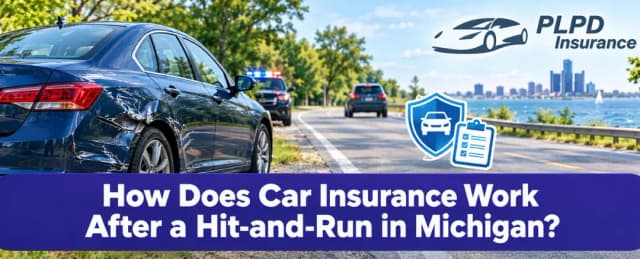
How Does Car Insurance Work After a Hit-and-Run in Michigan?

Car insurance may cover a hit-and-run in Michigan, even when the responsible driver cannot be found. However, your coverage depends on the type of insurance you purchased and the losses involved. Personal Injury Protection (PIP) may cover eligible medical expenses, while collision insurance may pay for vehicle repairs. Additionally, uninsured motorist coverage may help with certain injury-related damages.
Michigan follows a no-fault insurance system, but that does not mean every accident expense receives automatic coverage. For example, basic liability insurance generally will not pay to repair your own vehicle after a hit-and-run. An unidentified driver can also complicate the claims process, especially when your policy requires proof of fault. Therefore, understanding your auto insurance in Michigan before filing a claim can help prevent unexpected costs.
So, how does hit and run insurance in Michigan work when another driver leaves the accident scene? This guide explains which coverages may apply, how to report an accident, and what happens during an insurance investigation. We'll also discuss filing deadlines, possible deductibles, and the effect a claim may have on your premiums. Keep reading to learn how Michigan drivers can protect themselves after a hit-and-run.
What Counts as a Hit-and-Run Accident in Michigan?
A hit-and-run occurs when a driver leaves an accident scene without fulfilling the duties required under Michigan law. Depending on the circumstances, drivers must stop, provide identifying information, and offer reasonable assistance to injured people. These responsibilities apply to different situations involving injuries, deaths, or property damage. Leaving the scene can result in criminal penalties, regardless of whether the driver caused the collision.
Hit-and-run accidents can happen on highways, residential streets, or parking lots. For example, another driver might strike your vehicle and leave before exchanging insurance information. Someone might also damage your parked car while you're shopping and disappear without leaving contact details. In other situations, an unidentified vehicle may cause a crash without making direct contact.
Michigan traffic data show how frequently drivers face accident-related risks. According to the Michigan State Police, Michigan recorded 290,221 reported traffic crashes in 2025. This represents a slight increase from the 288,880 crashes recorded in 2024. However, these figures cover all reported traffic crashes rather than hit-and-run incidents alone.
Importantly, a driver leaving the scene does not automatically establish fault. Insurance companies still evaluate the available evidence before determining responsibility and coverage. Michigan's hit-and-run laws address drivers' legal duties, while insurance policies determine which losses qualify for payment. Consequently, the police investigation and insurance claim may reach different conclusions about the available evidence.
Which Types of Car Insurance Cover Hit-and-Run Accidents in Michigan?
Michigan no-fault insurance separates coverage for injuries from coverage for vehicle damage. As a result, one insurance benefit may cover medical expenses while another addresses repair costs. Your insurer also considers policy limits, deductibles, eligibility requirements, and applicable exclusions. Therefore, knowing which coverage applies can help you make informed decisions after a hit-and-run.
Insurance Coverage | What It May Cover After a Hit-and-Run |
Personal Injury Protection (PIP) | Eligible medical expenses, lost wages, and replacement services |
Collision insurance | Damage to your insured vehicle, depending on the collision option |
Uninsured motorist (UM) coverage | Certain injury-related damages caused by an unidentified driver |
Liability insurance | Covered losses you cause to others, not damage to your own vehicle |
Property Protection Insurance (PPI) | Certain damage caused by an insured vehicle to another person's property |
Michigan Assigned Claims Plan | Eligible no-fault benefits when no higher-priority insurer is available |
For a broader comparison, our guide to the different types of auto insurance explains how common coverage options work.
Personal Injury Protection (PIP) Coverage
Personal Injury Protection is a central component of Michigan's no-fault insurance system. It generally provides eligible accident-related benefits regardless of who caused the collision. Therefore, qualifying injured people may receive benefits even when the hit-and-run driver remains unidentified. However, the responsible insurer and available benefits depend on coverage selections and Michigan's insurance priority rules.
PIP medical benefits can pay reasonable and necessary expenses arising from covered accident-related injuries. Additionally, eligible claimants may receive wage-loss benefits when injuries prevent them from working. Replacement services may also help cover certain household tasks an injured person cannot perform. Michigan generally limits wage-loss and replacement-service benefits to three years after the accident.
Michigan offers several PIP medical coverage options, including unlimited benefits, $500,000, and $250,000 limits. Certain qualifying drivers can select a $50,000 option or choose an available exclusion or opt-out. As a result, not every Michigan policy provides the same level of medical protection. The Michigan Department of Insurance and Financial Services (DIFS) explains the available options and eligibility requirements.
However, PIP does not pay to repair your vehicle after a hit-and-run. It also does not automatically compensate injured people for pain and suffering. Those losses may involve other insurance coverages or legal claims. Therefore, drivers should distinguish medical protection from vehicle damage and liability coverage.
Collision Insurance Coverage
Collision insurance generally provides the most direct protection against hit-and-run vehicle damage. Depending on your policy, car insurance may cover repairs when another vehicle strikes your car and leaves the scene. Additionally, it may provide compensation for a covered total loss. However, the amount payable depends on your collision option, deductible, and applicable policy terms.
Michigan offers three main collision coverage options, each with different fault and deductible rules. These differences matter when the other driver cannot be located or identified. For example, your insurer may need evidence showing that you were not substantially at fault. Therefore, choosing the right collision option can affect your out-of-pocket expenses.
Collision Coverage | How It Generally Works |
Standard collision | Covers collision damage regardless of fault, with a deductible |
Broad-form collision | Covers collision damage regardless of fault; generally waives the deductible when you are not substantially at fault |
Limited collision | Covers collision damage only when you are not substantially at fault; deductible terms depend on the option purchased |
Under Michigan law, being substantially at fault generally means being more than 50% responsible for an accident. Therefore, the insurer may examine physical evidence and witness accounts when assessing responsibility. Broad-form collision may offer a deductible advantage when you are not substantially at fault. Meanwhile, limited collision coverage may not apply when the evidence establishes substantial fault.
These distinctions are addressed in Michigan Compiled Laws Section 500.3037. The statute governs the collision coverage options available under Michigan auto insurance policies. However, the exact payment still depends on the policy and documented circumstances. Reviewing your declarations page can help identify which option you purchased.
Comprehensive insurance generally does not cover damage from a collision with another vehicle. Instead, it typically covers certain non-collision events, such as theft, vandalism, fire, and weather damage. Therefore, comprehensive coverage should not be treated as a substitute for collision insurance. Drivers should review both options when evaluating Michigan auto insurance coverage.
For a closer look at out-of-pocket costs, read our guide explaining how car insurance deductibles work.
Uninsured Motorist (UM) Coverage
Uninsured motorist coverage is optional in Michigan and primarily addresses certain injury-related losses. Depending on the policy, it may apply when an unidentified hit-and-run driver causes an accident. For example, qualifying claimants may seek compensation for pain and suffering or other covered damages. However, UM coverage does not automatically pay for damage to your vehicle.
Insurance companies may require proof that the unidentified driver caused the collision. Additionally, some policies impose specific reporting deadlines or physical-contact requirements. These conditions can affect claims involving drivers who flee before exchanging information. Therefore, you should review your UM endorsement rather than assume every hit-and-run qualifies.
A phantom vehicle presents another important consideration. This situation occurs when an unidentified driver causes a crash without directly striking another vehicle. For example, a driver might force you off the road and continue driving. However, coverage for these incidents depends on the wording of your insurance contract.
Underinsured motorist coverage serves a different purpose from uninsured motorist protection. It generally addresses situations involving an identified at-fault driver whose liability insurance is insufficient. Consequently, it should not be treated as automatic protection against an unknown fleeing driver. Understanding these differences helps drivers evaluate optional coverage more accurately.
Liability Insurance and Property Protection Insurance
Michigan requires residual bodily injury and property damage liability insurance. This coverage generally helps protect drivers against certain legal claims arising from accidents they cause. However, it does not ordinarily pay for repairs to their own vehicles. Therefore, liability-only car insurance can leave drivers responsible for substantial hit-and-run repair costs.
Property Protection Insurance is another required part of Michigan's no-fault system. It provides up to $1 million for certain property damage caused by an insured vehicle in Michigan. For example, PPI can cover qualifying damage to buildings, fences, and properly parked vehicles. However, it generally does not cover damage to moving vehicles during ordinary collisions.
Properly parked vehicles receive special treatment under Michigan's property protection rules. If another driver damages your properly parked car, that driver's PPI coverage may apply. However, identifying the responsible insurer becomes difficult when the driver disappears. Consequently, your own collision coverage may provide a more practical option when the other driver remains unknown.
Michigan Assigned Claims Plan
The Michigan Assigned Claims Plan (MACP) helps certain injured people access no-fault benefits when no higher-priority insurer is available. It does not replace collision insurance or provide general compensation for vehicle repairs. Instead, the program assigns eligible PIP claims to participating insurers. Therefore, it primarily concerns accident-related injury benefits rather than property damage.
For example, an eligible pedestrian injured by an unidentified vehicle may need to seek benefits through the plan. However, eligibility depends on the accident circumstances, applicable priority rules, and statutory exclusions. Assigned claims PIP medical benefits are generally subject to a $250,000 limit. Consequently, the program does not provide the same protection as every privately purchased PIP option.
The MACP does not automatically accept a claim simply because another driver disappeared. Applicants must establish eligibility and provide the required supporting information. Additionally, certain uninsured vehicle owners may face restrictions under Michigan's no-fault law. Therefore, the assigned claims process should not be considered a substitute for maintaining required insurance.
What Should You Do Immediately After a Hit-and-Run in Michigan?
Your first priority after a hit-and-run should be your safety and the safety of your passengers. However, the actions you take afterward can also affect your insurance claim. Police reports, photographs, and witness information may help establish what happened. Therefore, documenting the incident as soon as possible can make the claims process easier.
Follow these steps after a hit-and-run accident:
- Check for injuries. Check yourself and your passengers for injuries before taking further action. Call 911 if anyone needs emergency assistance.
- Move to a safe location. If possible, move your vehicle away from active traffic. Avoid placing yourself in danger while inspecting the damage.
- Report the accident to the police. Explain that the other driver left without providing their information. Share any details you remember about the vehicle, license plate, or direction of travel.
- Photograph the accident scene. Capture your vehicle's damage, nearby debris, road conditions, and surrounding area. These photographs may help your insurer assess the collision.
- Collect witness information. Ask witnesses for their names and contact details. Additionally, check whether nearby businesses have security cameras that may have recorded the incident.
- Contact your insurance company. Report the accident promptly and ask about your available coverage. Confirm which documents the insurer needs before starting repairs.
Never chase the fleeing driver or attempt to confront them. Instead, provide any identifying information to law enforcement and allow officers to investigate. The Michigan State Police Traffic Crash Reporting Unit advises motorists to contact local law enforcement or a State Police post for crash reporting. Keep the police report number and request a copy when it becomes available.
If you notice injuries after leaving the scene, seek appropriate medical attention. Some symptoms may not become noticeable immediately after an accident. Additionally, keep records of medical visits, expenses, and missed work when they relate to your injuries. These documents may become relevant when requesting eligible Michigan no-fault benefits.
How Do You File a Hit-and-Run Insurance Claim in Michigan?
Filing a hit-and-run insurance claim starts with notifying your insurance company about the accident. The insurer will review your coverage, investigate the circumstances, and determine which losses qualify for payment. However, the process may take additional investigation when the other driver remains unidentified. Therefore, accurate documentation and timely communication can help prevent unnecessary delays.
Start by contacting your insurer or insurance agent and explaining what happened. Provide the accident date, location, police report number, and available information about the fleeing driver. Additionally, describe the vehicle damage and report any accident-related injuries. Your insurer can then explain which coverages may apply and whether separate claims are necessary.
Reporting Requirements and Filing Deadlines
Michigan drivers should report hit-and-run accidents promptly because several deadlines may apply. State law establishes certain accident reporting duties, while individual policies may contain additional notice requirements. For example, some uninsured motorist policies require prompt police reporting and notice to the insurer. However, these contractual deadlines are not identical across every insurance company.
Michigan also establishes statutory deadlines for recovering no-fault benefits. Under Michigan Compiled Laws Section 500.3145, an action for PIP benefits generally must begin within one year after the accident. However, qualifying written notice or an earlier benefit payment can affect that deadline. Additional rules govern later claims, unpaid expenses, and certain periods when a claim remains under review.
Importantly, the one-year PIP rule does not establish a universal deadline for every hit-and-run insurance claim. Collision and uninsured motorist claims may involve different policy conditions and legal time limits. Therefore, review your insurance contract immediately rather than waiting until the end of the year. Ask your insurer to confirm all relevant reporting and filing requirements in writing.
Required Documentation and Insurance Claim Investigation
Your insurance company needs enough information to evaluate the accident and determine whether coverage applies. Since the other driver may remain unidentified, evidence becomes especially important during the investigation. Additionally, an insurance adjuster may inspect your vehicle and review available repair estimates. The insurer may also examine witness statements, photographs, and surveillance footage when determining fault.
Prepare the following documents when filing your claim:
Documentation | Purpose |
Police accident report | Records the reported collision and available accident details |
Vehicle photographs | Shows the location and extent of physical damage |
Witness statements | May help establish how the accident occurred |
Dashcam or surveillance footage | May identify the fleeing vehicle or show the collision |
Repair estimates | Helps establish expected vehicle repair costs |
Medical records and bills | Supports eligible injury-related insurance claims |
Insurance policy details | Identifies coverage limits, deductibles, and relevant conditions |
After reviewing the evidence, the insurer will determine whether your claim qualifies for payment. For collision claims, the company may authorize repairs or evaluate whether the vehicle is a total loss. If the vehicle qualifies as a covered total loss, payment generally reflects its actual cash value, subject to policy terms. Additionally, your deductible may reduce the amount you receive.
If the insurer requests additional information, respond promptly and keep copies of your correspondence. However, avoid guessing about accident details you cannot remember. Provide accurate information and explain when certain facts remain unknown. If the insurer denies your claim, request a written explanation identifying the reasons and applicable policy provisions.
For additional details about filing requirements, documentation, and insurer decisions, see our guide to the auto accident insurance claim process.
Will a Hit-and-Run Affect Your Car Insurance Rates in Michigan?
A hit-and-run claim does not automatically increase your Michigan car insurance premiums. However, the effect depends on fault, Michigan's insurance rating rules, and other permitted pricing factors. Insurers may review accident records when determining how applicable rating rules affect a policy. Therefore, the circumstances of the accident matter more than the simple fact that you filed a claim.
Michigan generally restricts insurers from increasing premiums because of accidents where the insured driver was not substantially at fault. However, your renewal premium may still change for other permitted reasons. For example, insurers may adjust rates because of broader repair costs, coverage changes, or approved pricing adjustments. Consequently, a premium increase does not necessarily mean your hit-and-run claim caused it.
The insurer may also investigate fault when the fleeing driver cannot be identified. Witness statements, vehicle damage, and surveillance footage can help establish the circumstances. Additionally, your collision coverage option may influence the deductible you owe. Therefore, maintaining accurate records can help when questions arise about your responsibility for the accident.
If you're comparing affordable auto insurance in Michigan, consider more than the monthly premium. Collision options, deductibles, and uninsured motorist protection can make a meaningful difference after a hit-and-run. Although cheap car insurance may reduce your regular expenses, limited coverage can leave you facing larger repair bills. Comparing policy benefits alongside prices can help you choose protection that fits your needs.
Since premiums vary by coverage and driver circumstances, our guide explains how much auto insurance costs in Michigan and the factors that influence rates.
The Bottom Line: Protecting Yourself After a Michigan Hit-and-Run
A hit-and-run can create unexpected expenses, but Michigan auto insurance may provide important financial protection. PIP can cover eligible injury-related expenses, while collision insurance may help pay for vehicle repairs. Additionally, uninsured motorist coverage may compensate qualifying injured people when the responsible driver remains unidentified. However, each coverage has its own requirements, limits, and exclusions.
The best way to prepare is to review your insurance before an accident occurs. Check your collision option, deductible, PIP medical coverage, and optional uninsured motorist protection. If you're looking for affordable car insurance in Michigan, compare the protection offered rather than focusing only on price. PLPD can help you compare Michigan auto insurance options and find coverage that fits your needs and budget.
Frequently Asked Questions (FAQs)
Does Liability-Only Insurance Cover a Hit-and-Run in Michigan?
Liability-only insurance generally does not cover repairs to your own vehicle after a hit-and-run. Michigan's required no-fault coverage may provide eligible injury-related benefits, but it does not replace collision insurance. Therefore, drivers without collision coverage may need to pay for their own vehicle repairs. Other recovery options may become available if the responsible driver is eventually identified.
Do You Have to Pay a Deductible After a Hit-and-Run in Michigan?
Whether you pay a deductible depends on your collision coverage and the circumstances of the accident. Standard collision generally requires a deductible, regardless of who caused the crash. However, broad-form collision generally waives the deductible when you are not substantially at fault. If the responsible driver is later identified, your insurer may also pursue reimbursement and possible deductible recovery.
What Happens If Someone Hits Your Parked Car and Drives Away in Michigan?
If someone hits your properly parked car and leaves, collision insurance may help cover the damage. Michigan's property protection rules may also apply when the responsible driver and insurer can be identified. However, an unknown driver makes recovering payment through that driver's insurance more difficult. Report the incident, photograph the damage, and check for witnesses or nearby security footage.
Can You File a Hit-and-Run Insurance Claim Without a Police Report?
You can notify your insurer about a hit-and-run even without a completed police report. However, some insurance policies require police documentation for certain claims involving unidentified drivers. Without a report, proving the accident circumstances may also become more difficult. Therefore, contact law enforcement promptly and ask your insurer about its specific documentation requirements.
Does Michigan's Mini-Tort Law Apply to Hit-and-Run Accidents?
Michigan's mini-tort law allows eligible drivers to recover up to $3,000 for certain uninsured vehicle damage. However, recovering payment generally requires identifying the responsible driver and establishing their liability. Therefore, pursuing a mini-tort claim becomes difficult when the hit-and-run driver remains unknown. Mini-tort recovery is not a replacement for collision insurance.
What Should You Do If Your Hit-and-Run Insurance Claim Is Denied?
First, request a written explanation identifying why your insurance company denied the claim. Review the relevant policy provisions and compare them with your accident documentation. If you disagree, submit additional evidence and ask the insurer to reconsider its decision. You can also contact the Michigan Department of Insurance and Financial Services (DIFS) for assistance with unresolved insurance complaints.
References:
1. Michigan State Police. (2026, August 6). Final 2025 crash data shows roadway deaths decreased but challenges remain. https://www.michigan.gov/mspnewsroom/news-releases/2026/08/06/final-2025-crash-data-shows-roadway-deaths-decreased-but-challenges-remain
2. Michigan Legislature. (2019). Michigan Compiled Laws § 500.3145: Limitation of actions for recovery of personal or property protection insurance benefits. https://legislature.mi.gov/Laws/MCL?objectName=mcl-500-3145
3. National Association of Insurance Commissioners. (2022). What you should know about filing an auto claim. https://content.naic.org/article/what-you-should-know-about-filing-auto-claim
4. Insurance Information Institute. (n.d.). Auto insurance basics—Understanding your coverage. https://www.iii.org/article/auto-insurance-basics-understanding-your-coverage
5. Michigan Traffic Crash Facts. (n.d.). 2025 at-a-glance. https://www.michigantrafficcrashfacts.org/pub/2025/at-a-glance
Recent Posts
How Does Car Insurance Work After a Hit-and-Run in Michigan?
Are Older Cars Cheaper to Insure?

How to File a Renters Insurance Claim?
Categories
Life Insurance

Auto insurance
Insurance
Motorcycle Insurance
Renters Insurance
Homeowners Insurance
RV Insurance
Boat Insurance
Snowmobile Insurance
Follow Us