


 Back
Are Older Cars Cheaper to Insure?
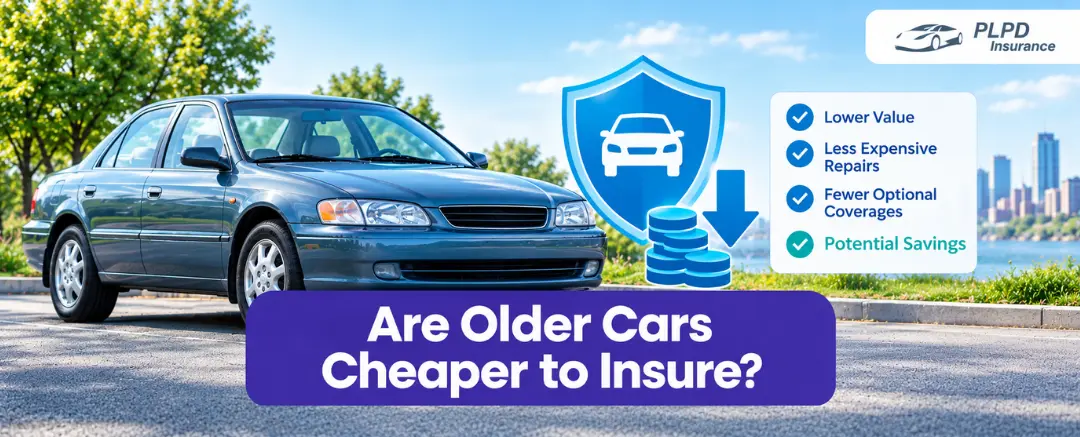
If you own an older vehicle, you may be wondering whether it's cheaper to insure than a newer car. In many cases, the answer is yes. Older cars often cost less to insure because they have lower market values and may not need certain optional coverages.
However, factors such as repair costs, theft risk, safety features, and your state’s insurance requirements can still affect your premium. Understanding these factors can help you determine whether an older car will actually cost less to insure.
In this guide, you will learn how a car's age impacts insurance costs, when older cars are cheaper to insure, when they can become more expensive, and how your choice of coverage can affect your premium.
Does Your Car’s Age Affect Your Premiums?
Yes, your car’s age has a significant impact on your premiums. Generally, newer cars are more expensive to insure, especially because they have higher repair and replacement costs. As a car gets older, its market value usually declines, which can reduce the cost of certain coverages.
However, older vehicles may not always be cheaper to insure due to limited availability of replacement parts, a lack of modern safety features, or a higher risk of theft. Additionally, some older sports, luxury, and collectible vehicles may increase in value over time. As a result, they may cost more to insure than a standard older car.
Are Older Cars Cheaper to Insure in Michigan?
Based on the car insurance laws in Michigan, you need to carry certain coverage no matter how old your car is. Even here in Michigan, older cars are generally cheaper to insure because they have lower market values and may not need optional coverages such as collision or comprehensive insurance.
However, Michigan's required coverages, including liability, Personal Injury Protection (PIP), and Property Protection Insurance (PPI), can make up a significant portion of your overall insurance costs.
So, whether an older car is cheaper or more expensive to insure in Michigan often depends on its value, repair costs, theft risk, and the coverage options you choose. So, if you have an older car, and you need to get it insured, the best way to find out whether it’s cheap or expensive to insure is to consult with a reliable insurance agency to explore suitable auto insurance coverage options.
When Are Older Cars Cheaper to Insure?
As a vehicle ages, its insurance costs may gradually decline under certain circumstances. This is often due to changes in the car's market value and your choice of coverage. Here’s a breakdown to help you understand how it works exactly.
When Your Car Depreciates Over Time
Typically, your car’s value declines each year due to depreciation. According to Kelley Blue Book and Lending Tree, a brand-new car usually depreciates about 30% in the first 2 years, and over 60% within less than 5 years.
So, the more your car depreciates, the cheaper its replacement parts and value are likely to be, and that’s why older cars can be cheaper to insure. The table below shows how much a $32,000 Toyota Camry can depreciate in 6 years.
Vehicle Age | Estimated Depreciation | Estimated Vehicle Value |
New (Year 0) | 0% | $32,000 |
Year 1 | 20% | $25,600 |
Year 2 | 30% | $22,400 |
Year 3 | 42% | $18,560 |
Year 4 | 52% | $15,360 |
Year 5 | 60% | $12,800 |
Year 6 | 65% | $11,200 |
Note: Values are estimates for illustrative purposes and may vary depending on the vehicle's condition, mileage, and market conditions.
When You Drop Any Optional Coverage
As your car gets older and loses value, you may decide that certain optional coverages are no longer worth the cost. This is especially true when the annual premium for a coverage starts to approach the vehicle's actual cash value.
For example, collision coverage helps pay for damage to your vehicle after an accident, while comprehensive coverage helps cover losses caused by theft, vandalism, fire, severe weather, and other non-collision incidents. If your car has a low market value, the potential insurance payout after a covered loss may be limited, making these coverages less cost-effective.
By dropping collision, comprehensive, or other optional coverages that no longer fit your needs, you can often reduce your overall insurance premium. However, before removing any coverage, it's important to consider your vehicle's value, financial situation, and level of risk.
When Are Older Cars Expensive to Insure?
Car insurance doesn't always get cheaper for older cars. In some cases, it can be expensive. Let's look at some of the factors that can increase insurance costs for older vehicles.
Your Car Lacks Modern Safety Features
If your car lacks modern safety features like automatic emergency braking, blind-spot monitoring, lane departure warning, adaptive cruise control, and rearview cameras, it can increase the chances of an accident.
As these technologies are designed to help drivers avoid collisions, insurers may view vehicles without them as having a higher risk of claims. So, older cars that lack modern safety features can sometimes be more expensive to insure than similar vehicles equipped with newer safety technology.
Expensive Repair/Replacement Costs
Even if you own an older car, you may still face high repair and replacement costs. This can happen when replacement parts are difficult to find or when you own a luxury, sports, or collectible vehicle.
Unlike most standard vehicles, some high-end and classic cars may increase in value over time. In addition, these vehicles often require specialized parts and repair expertise, which can make repairs more expensive. So, insurers may charge higher premiums to match the increased cost of repairing or replacing the car.
Might Be More Prone to Theft
Some older cars may be more prone to theft than newer vehicles. This can happen when a vehicle lacks modern anti-theft features such as engine immobilizers, alarm systems, or GPS tracking technology.
In some cases, thieves may also target older vehicles because they are easier to break into or because their parts are in high demand. As a result, insurers may consider certain older models to be at a higher risk of theft.
If your vehicle has a history of theft claims or is commonly targeted by thieves, it may be more expensive to insure. This is because insurers may need to pay more theft-related claims for those vehicles.
What Type of Coverage Should You Have for Older Cars in Michigan?
Whether you're shopping for auto insurance or reviewing coverage for an older car, it's important to understand what coverage you must carry and what coverage may be worth keeping in Michigan. The right car insurance coverage for an older vehicle depends on its value, condition, usage, and your personal needs.
While Michigan drivers are required to carry certain coverages by law, some optional coverages may or may not be worth keeping as a vehicle ages. Here are some types of car insurance coverage you should consider for an older car in Michigan.
Liability Coverage
Liability coverage is required in Michigan and is commonly referred to as PLPD (Personal Liability and Property Damage) coverage. Under Michigan law, drivers must carry at least the minimum required liability coverage to legally operate a vehicle. However, minimum coverage may not always provide enough financial protection after a serious accident. So, carrying higher liability limits can help reduce your out-of-pocket expenses and protect you from potential lawsuits if the damages exceed your policy limits.
PIP Coverage
Personal Injury Protection (PIP) coverage is mandatory in Michigan. It helps cover medical expenses and certain related costs after an accident, regardless of who is at fault. Since medical treatment can be expensive, it's important to maintain an appropriate level of PIP coverage even if you own an older vehicle.
PPI Coverage
Property Protection Insurance (PPI) is also required in Michigan. It helps pay for damage your vehicle causes to another person's property, such as buildings, fences, or parked vehicles. Since this coverage is required by law, you must carry it regardless of your vehicle's age.
Collision Coverage
Collision coverage helps pay for damage to your vehicle after an accident. For older cars with a low market value, keeping collision coverage may not always be cost-effective because the potential insurance payout could be limited. However, if replacing or repairing your vehicle would create a financial burden, it may still be worth considering.
On the other hand, if you own a high-end luxury, sports, or collectible vehicle that retains or increases its value over time, collision coverage can provide important financial protection against costly repairs and replacement expenses.
Comprehensive Coverage
Comprehensive coverage helps pay for losses caused by theft, vandalism, fire, falling objects, and certain weather-related events. If your older vehicle still has significant value or is at risk of theft or damage, comprehensive coverage may provide valuable financial protection.
This coverage can be especially important for high-end luxury, sports, and collectible vehicles. Since these cars may have higher values and more expensive replacement parts, comprehensive coverage can help protect you from substantial out-of-pocket costs if the vehicle is stolen or damaged by a covered event.
Older Cars vs. Classic Cars: What's the Difference for Auto Insurance?
In most cases, older cars are cheaper to insure because their market value tends to decline over time. Classic cars, on the other hand, are vehicles that may retain or increase their value due to their age, rarity, condition, or collectability.
As these vehicles are valued differently, their insurance needs and coverage options can also be different. The table below highlights some of the key differences between older cars and classic cars for insurance purposes.
Factor | Older Car | Classic Car |
Typical Vehicle Age | Usually 10+ years old | Typically 20–25+ years old (varies by insurer) |
Purpose | Daily transportation | Collectible, hobby, or occasional-use vehicle |
Market Value | Generally decreases over time | May retain or increase in value |
Insurance Value | Based on actual cash value (ACV) | Often insured using an agreed value policy |
Annual Mileage | Usually driven regularly | Often driven on a limited basis |
Repair Costs | May vary depending on parts availability | Can be expensive due to specialty parts and labor |
Coverage Needs | Required coverages plus optional protection based on vehicle value | May require specialized classic car insurance coverage |
Premium Factors | Vehicle value, repair costs, safety features, theft risk, and driver profile | Vehicle value, rarity, storage conditions, usage restrictions, and driver profile |
Note: Auto insurance eligibility requirements for classic cars vary by insurer. Factors such as vehicle age, condition, mileage, and intended use may determine whether a vehicle qualifies for classic car insurance.
What Type of Car Insurance Should You Get for a Classic Car?
Unlike standard cars, classic cars are often insured using a different valuation method. For most standard vehicles, collision and comprehensive coverage are based on the vehicle's actual cash value, which takes depreciation into account.
However, classic cars are commonly insured using an Agreed Value policy. This means you and your insurer agree on the vehicle's value upfront. If the vehicle is declared a total loss, the claim is typically settled based on that agreed value.
Depending on your insurer, you may also have the option to add coverages such as Original Parts coverage and Custom Parts Replacement coverage for additional protection. Keep in mind that not all older vehicles qualify for classic car insurance, as eligibility requirements can vary by insurer.
Tips to Lower Your Premiums for an Older Car
Whether you own a standard car or a classic car, it's possible to lower your insurance premiums by making the right coverage choices. Here are some practical tips to help you save on auto insurance.
- Compare quotes from multiple insurance providers before purchasing or renewing your policy.
- Increase your deductible if you can comfortably afford a higher out-of-pocket cost after a claim.
- Remove collision or comprehensive coverage if your vehicle's market value is low and the coverage is no longer cost-effective. Ask about available discounts, such as safe driver, multi-vehicle, bundling, low-mileage, and paid-in-full discounts.
- Maintain a clean driving record by avoiding accidents and traffic violations.
- Consider reducing your annual mileage if possible, as lower mileage may qualify for discounts with some insurers.
- Install anti-theft devices or security features to help reduce the risk of theft.
- Review your coverage regularly to ensure you're not paying for protection you no longer need.
- Store classic cars in a secure garage and limit their use to qualify for potential classic car insurance discounts.
- Work with a reputable insurance agency to find coverage options that match your vehicle's value and insurance needs.
The Bottom Line: Older Cars are often Cheaper to Insure, but Not Always
While older cars are often cheaper to insure, several factors can influence your premiums, and in some cases, they may even be more expensive to insure than newer vehicles. Generally, older cars cost less to insure because they have lower market values and may not require certain optional coverages.
However, factors such as repair and replacement costs, theft risk, safety features, vehicle type, and your coverage choices can all affect the overall cost of insurance. Whether you own a standard older vehicle or a collectible classic car, maintaining the right coverage is important to protect yourself from unexpected financial losses.
The key is finding a policy that provides the protection you need without paying for coverage that no longer makes sense for your vehicle. If you're unsure which coverage options are right for your older car, contact us today for expert advice and a free quote. Our team can help you compare coverage options and find a policy that fits both your insurance needs and your budget.
Frequently Asked Questions (FAQs)
Is it cheaper to insure a 20 year old car?
In many cases, yes. A 20-year-old standard car is often cheaper to insure because it typically has a lower market value and may not require certain optional coverages. However, if the vehicle is considered a classic car, insurance costs may vary depending on its value, rarity, repair costs, and the type of coverage you choose.
Should I have collision insurance on a 20 year old car?
It depends on your vehicle's market value and your financial situation. If your 20-year-old car has a low value, collision coverage may not be cost-effective because the potential insurance payout could be limited. However, if repairing or replacing the vehicle would create a financial burden, keeping collision coverage may still be worth considering.
Should I have comprehensive insurance on a 20 year old car?
It depends on your vehicle's value and risk of loss. Comprehensive coverage helps protect against theft, vandalism, fire, severe weather, and other non-collision incidents. If your 20-year-old car still has significant value or would be costly to replace, keeping comprehensive coverage may be worth considering.
Is it worth it to have full coverage on a 10 year old car?
It depends on your vehicle's value, repair costs, and financial situation. Full coverage may still be worth it for a 10-year-old car if it has significant value or would be expensive to repair or replace. However, if the vehicle has a low market value, you may want to compare the cost of full coverage against the potential insurance payout.
Recent Posts
Are Older Cars Cheaper to Insure?

How to File a Renters Insurance Claim?

Does Renters Insurance Cover Bike Theft?
Categories
Life Insurance

Auto insurance
Insurance
Motorcycle Insurance
Renters Insurance
Homeowners Insurance
RV Insurance
Boat Insurance
Snowmobile Insurance
Follow Us